Missional Month Spotlight
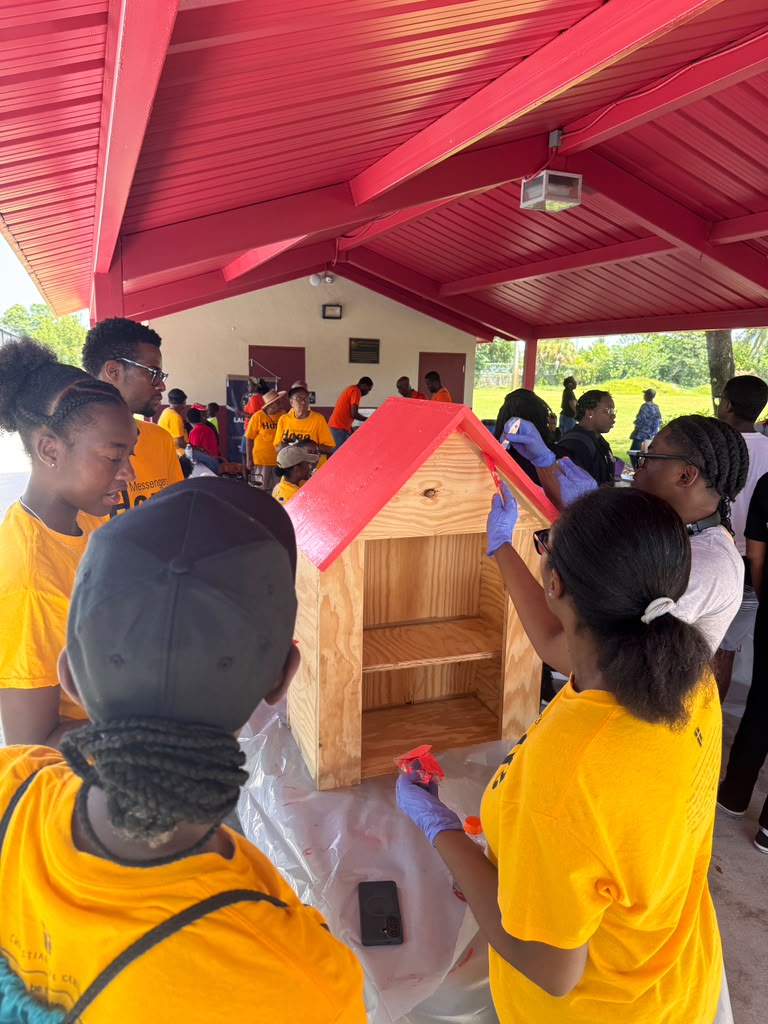
Yesterday, three Christian Life Center Life Groups traded their living rooms for a park pavilion. Instead of gathering around a coffee table, they gathered around plywood, paint, and a purpose bigger than any of them, and in doing so, gave South Florida a living picture of what it means to be a sent people.
On Saturday, August 15, City of Lauderdale Lakes Commissioner Easton K. Harrison hosted the Little Free Libraries Initiative: Community Build & Paint Event at Willie Webb Sr. Park, part of the city’s 65th anniversary “We Care” celebration. The day was made possible through a partnership of community-minded organizations: the Kiwanis Club of Lauderdale Lakes, whose long-standing commitment to literacy and civic service helped anchor the initiative, and Christian Life Center, which brought Life Groups into the field to serve alongside them. Nehemiah Ministry, led by Jeff Campbell, guided the build itself, walking volunteers of every age through the hands-on work of constructing and painting Little Free Libraries that will soon stand in neighborhoods across Lauderdale Lakes, offering books, literacy, and connection to families who need both.
It’s worth pausing on that partnership. The Kiwanis Club of Lauderdale Lakes didn’t just lend its name to the event; it lent its mission. Kiwanis exists to serve the children of the world, one community at a time, and this initiative is a direct expression of that calling. When a civic organization built around service and a church built around sending share the same afternoon, the same tools, and the same goal, it’s a reminder that Kingdom work often happens in partnership with people and organizations outside our own walls, and that’s worth celebrating, not just tolerating.
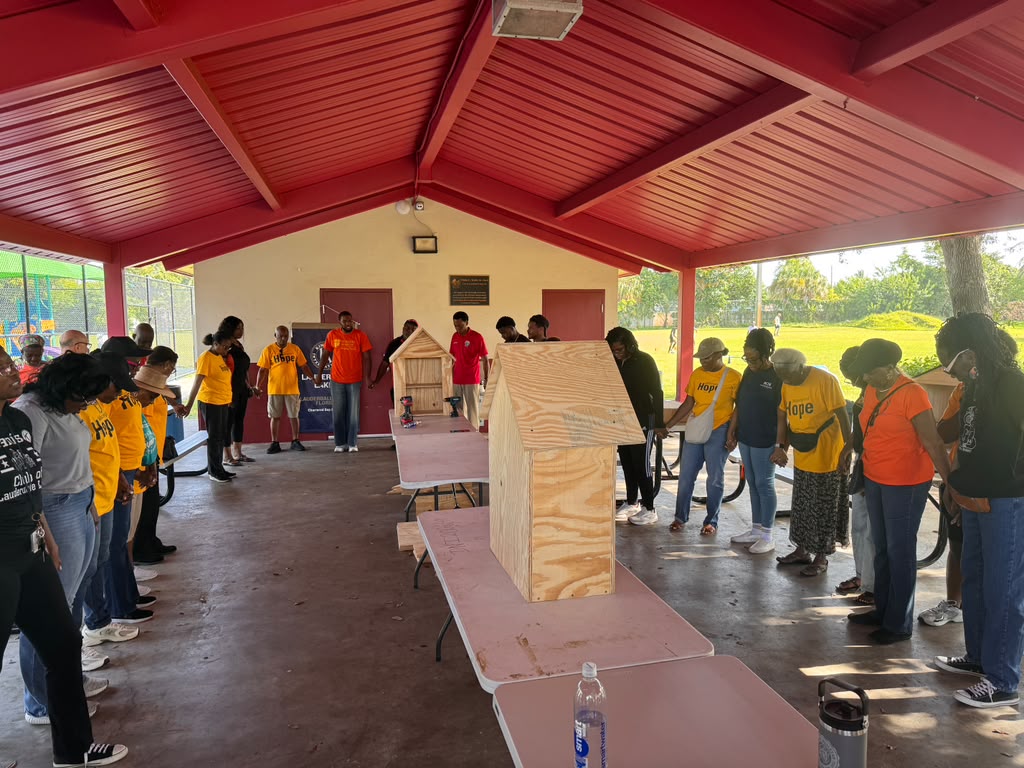
Under the red pavilion roof, the scene told the story better than words could: teenagers in bright yellow “Messengers of Hope” shirts steadying a roofline while an elder in a wide-brimmed sunhat guided their hands; volunteers in blue gloves brushing red paint onto a peaked roof; finished houses lined up in a row — sky blue walls, red roofs, one painted in bold navy and gold waiting to be planted in the community as small, permanent signs that someone cares.
Three Life Groups, One Sending
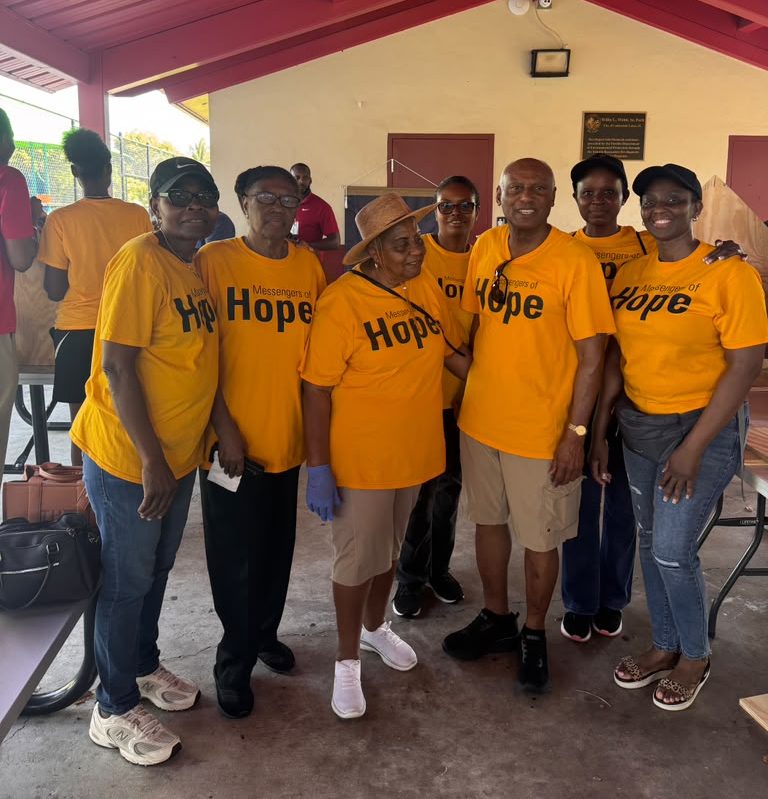
What made the day distinct wasn’t just the labor — it was who showed up and why. Three CLC Life Groups didn’t simply volunteer; they went. They left the comfort of their regular meeting space and stepped into a public park, alongside city leadership, a Kiwanis club, and neighbors they’d never met, to build something that will outlast the afternoon.
That’s Missional Month in a single image: a Life Group is never meant to be a closed circle. It’s meant to be a launching pad.
As part of this outreach, members from each group are sharing what the experience stirred in them — testimonies that will be featured throughout Missional Month as living evidence of what happens when a group stops asking “what are we studying next?” and starts asking “who are we sent to?” Watch for these testimonies to be highlighted across CLC’s Missional Month platform in the coming weeks, group by group, story by story.
Why a Book Box Matters More Than It Looks
It’s easy to see a small wooden box with a peaked roof and think “cute.” But the Little Free Library movement was founded on a much bigger conviction: that literacy is a right, not a privilege, and that a neighborhood book exchange, free, unlocked, open to anyone who walks by, can be one of the simplest tools for closing the literacy gap in under-resourced communities. Every library installed is a small stand against illiteracy, planted in a front yard or a park, saying: reading belongs here.
That mission matters more than most people realize, especially for those of us who serve in reentry ministry. The data on literacy and incarceration are sobering:
- The National Assessment of Adult Literacy found that roughly seven in ten incarcerated adults read below a fourth-grade level, leaving them without the basic reading skills needed to navigate everyday life or qualify for anything beyond the lowest-paying work.¹
- That same federal assessment found people in prison are consistently and significantly overrepresented at the lowest literacy levels compared to the general population, with the widest gap showing up in quantitative literacy — the ability to use numbers in daily reasoning.²
- Estimates from the Correctional Education Association and related research put overall illiteracy among adult inmates as high as 75 percent.³
- Among youth who come into contact with the juvenile justice system, an estimated 85 percent read at a functionally low level — and juvenile incarceration itself lowers the odds of finishing high school while raising the odds of incarceration later in life.⁴
- High school dropouts are roughly three and a half times more likely to be arrested in their lifetime than graduates, and more likely to be incarcerated than peers who complete a four-year degree.⁴
Read those numbers again, and the “school-to-prison pipeline” stops being a slogan and starts looking like a math problem — one that starts as early as third and fourth grade, when a child who isn’t reading on level quietly begins falling behind a system with very few off-ramps.
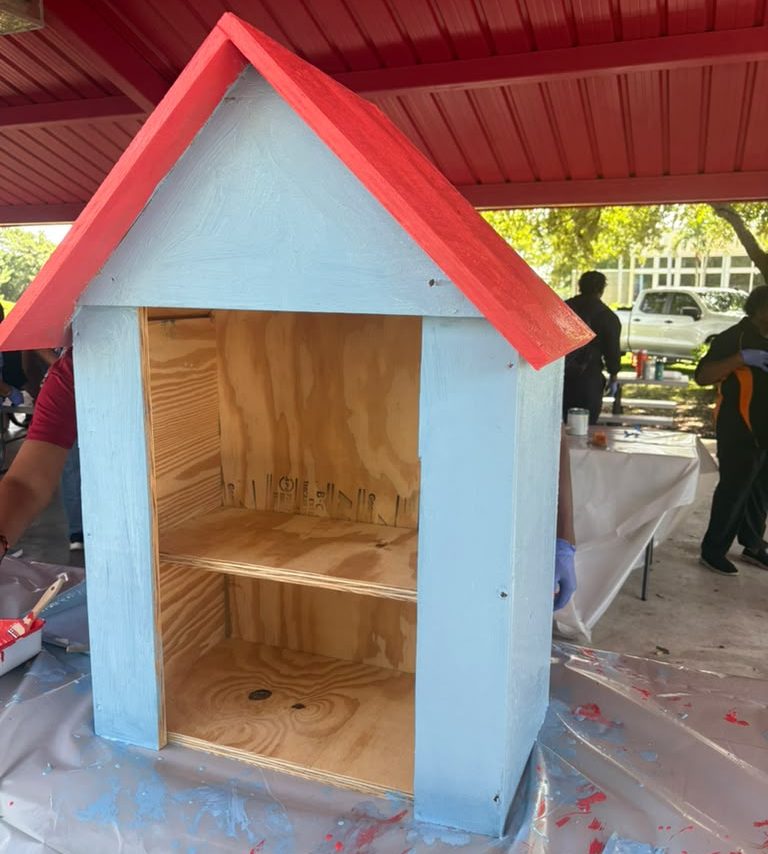
That’s what makes Commissioner Harrison’s Little Free Libraries Initiative more than a feel-good afternoon project. Every book box built yesterday is a small act of prevention — a literacy intervention placed directly in the path of families who may not have easy access to a library branch or a home full of books. For a ministry rooted in reentry and restoration, this is deeply personal work: if illiteracy is one of the on-ramps to incarceration, then literacy access is one of the off-ramps. Building that little library wasn’t just community service. It was standing in the gap, upstream, before the need for restoration ever began.
Missio Dei: It Was Never Our Mission to Begin With
Theologically, what happened at Willie Webb Sr. Park is a small but faithful expression of Missio Dei, the mission of God. Long before any Life Group signed up to build a library, God was already at work in Lauderdale Lakes: in a commissioner who cared enough to launch a literacy initiative, in a ministry organization willing to lead the build, in children who would one day open that little door and find a book waiting for them.
Missiology reminds us that mission does not originate with the church; it originates with God, and the church is invited to participate in what God is already doing in the world. CLC’s Life Groups didn’t create this opportunity for good works; they stepped into one. That’s the posture Missional Month is trying to form in all of us: less “let’s plan an outreach” and more “let’s notice where God is already moving and go there.”
The Mandate to Go
Jesus didn’t leave the church a suggestion; He left a mandate: “Go therefore and make disciples of all nations…”(Matthew 28:19–20). The Great Commission is not primarily about a program; it’s about a posture of being sent. A Life Group that only gathers has embraced half the calling. A Life Group that gathers and goes has embraced the whole one.
That’s the shift this outreach represents, moving from gathering to sending, from inward fellowship to outward mission. Painting a library roof and building bookshelves for children who may never set foot in a CLC building is exactly the kind of quiet, tangible obedience the mandate to “Go” calls for. It doesn’t always look dramatic. Sometimes it looks like blue gloves and a paintbrush under a pavilion roof.
What’s Next
The Little Free Libraries built yesterday will soon be installed throughout Lauderdale Lakes, ready to plant seeds of literacy and community in neighborhoods that need both. And the three Life Groups who showed up will carry something home too, a fresh conviction that mission isn’t a once-a-year event, but a way of life.
Stay tuned throughout Missional Month as we continue to highlight testimonies from these Life Groups and other outreach moments happening across Christian Life Center. If gathering has been the story of your group so far, let this be the invitation to write the next chapter: Go.
Special thanks to Commissioner Easton K. Harrison and the City of Lauderdale Lakes for hosting, the Kiwanis Club of Lauderdale Lakes for their partnership and continued investment in this community, and Nehemiah Ministry for leading the build.
Sources
- National Center for Education Statistics, Literacy Behind Bars: Results from the 2003 National Assessment of Adult Literacy Prison Survey (NCES 2007-473), U.S. Department of Education, cited via Literacy Mid-South, “The Relationship Between Incarceration and Low Literacy,” https://www.literacymidsouth.org/news/the-relationship-between-incarceration-and-low-literacy
- Prison Policy Initiative, “Uncovering Mass Incarceration’s Literacy Disparity” (2016), based on U.S. Department of Education National Assessment of Adult Literacy (NAAL) Survey, 2003, https://www.prisonpolicy.org/blog/2016/04/01/literacy/
- Office of Justice Programs, “Prison Literacy Connection,” citing Correctional Education Association data, https://www.ojp.gov/ncjrs/virtual-library/abstracts/prison-literacy-connection
- GreaterGood, “Illiteracy Leads to Higher Recidivism Among U.S. Prisoners,” citing Literacy Mid-South and The Literacy Project Foundation, https://greatergood.com/blogs/news/prison-illiteracy/


Leave a Reply