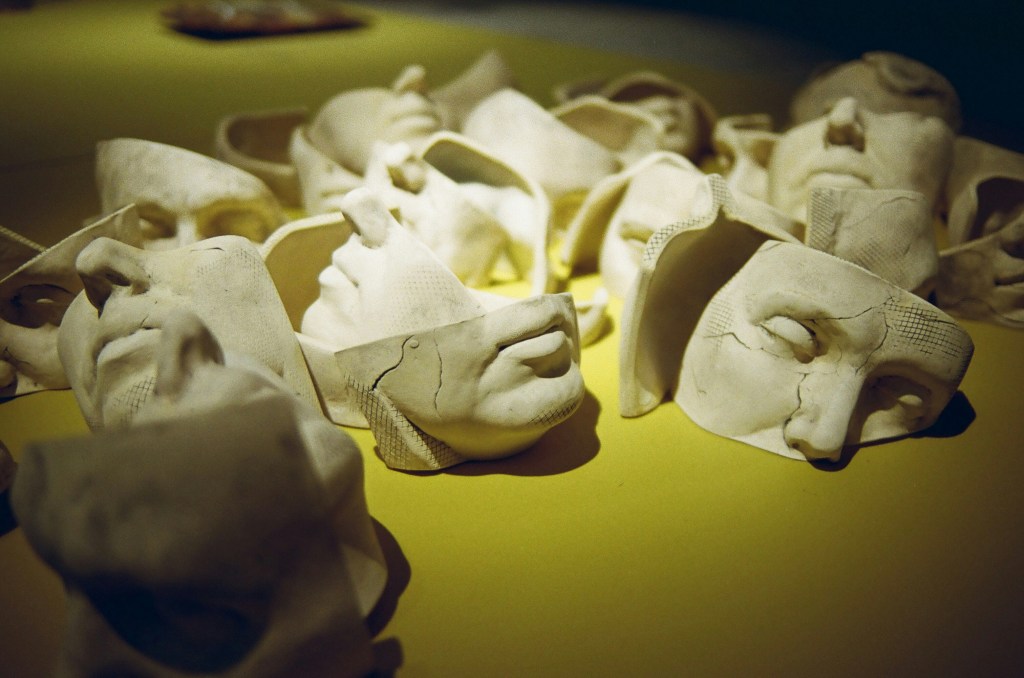
True Identity: Becoming Who God Says You Are
A 6-Part Series on Biblical Identity for Men
Every man is searching for a sense of self—something to anchor him, define him, and prove that he matters. But most of us don’t look to God first. We look to success. To status. To religion. To performance. We chase identity in the wrong places and end up more exhausted than fulfilled.
In this post, we’ll expose four common ways men build their identity on shifting sand—and contrast each with the only foundation that holds: who we are in Christ.
True Identity: Becoming Who God Says You Are
We all want to matter.
We all want to feel like somebody.
The problem is—we’re often chasing identity in the wrong places.
In fact, most men fall into one of four traps. They may wear different faces—secular, moral, religious, or Christian in name—but they all have one thing in common: they make identity something you have to earn.
Let’s break down these four worldviews and see how each one promises fulfillment but leaves you empty.
1. The Secular Man
Core Pursuit: Maximum pleasure, minimum pain
This man lives for the weekend. For the next thrill, the next win, the next escape. He’s chasing status, money, comfort, pleasure, attention.
On the outside? He might look successful. But inside? He’s exhausted. Numb. Never satisfied.
“What good is it for someone to gain the whole world, yet forfeit their soul?”
(Mark 8:36)
False Identity: “I am what I enjoy.”
Result: Addiction, burnout, emptiness.
2. The Moral Man
Core Pursuit: Be good. Be true to yourself.
This guy tries to do the right thing. He wants to be a good husband, good dad, good guy. But under the surface, he’s constantly measuring himself—wondering if he’s done enough, been enough, helped enough.
False Identity: “I am what I do right.”
Result: Self-righteousness or quiet despair. Either you think you’re better than everyone—or you know you’re not and hate yourself for it.
Moral living can look good, but it can’t save your soul.
3. The Religious Man
Core Pursuit: Earn God’s approval through performance.
He’s at church. He serves. He reads. He prays. But deep down, it’s not about love—it’s about fear. He thinks if he can check enough boxes, maybe God won’t be disappointed.
False Identity: “I am how spiritual I appear.”
Result: Legalism. Hypocrisy. Spiritual exhaustion.
This is church inanity—a shell of Christianity that wears the clothes of faith but lacks the power of grace.
4. The Redeemed Man (The Christian Identity)
Core Pursuit: Live from grace, not for approval.
This man knows he’s not enough—and that’s the point. He’s stopped pretending. He’s stopped performing. He’s found peace in the truth:
“If anyone is in Christ, the new creation has come: The old has gone, the new is here!”
(2 Corinthians 5:17)
True Identity: “I am who God says I am—because of what Jesus did, not what I do.”
Result: Freedom. Purpose. Contentment. Joy.
Why This Matters
The Christian life isn’t about trying harder.
It’s about trusting deeper.
Your identity isn’t something you achieve. It’s something you receive.
As John Stott once said:
“Our self is a complex entity of good and glory, glory and shame, of creation and fall… We are created, fallen and redeemed.”
Hold that tension. You are not the sum of your mistakes, and you are not the sum of your strengths.
You are redeemed.
Reflection Question
Which of these worldviews have shaped your identity the most?
How have they helped—or hurt—you?
Key Scriptures
Ready to see what God really says about who you are?
 "From Prison to Pulpit: The Divine Set Up Journey of Author Shawn O'Neill"
Leave a comment